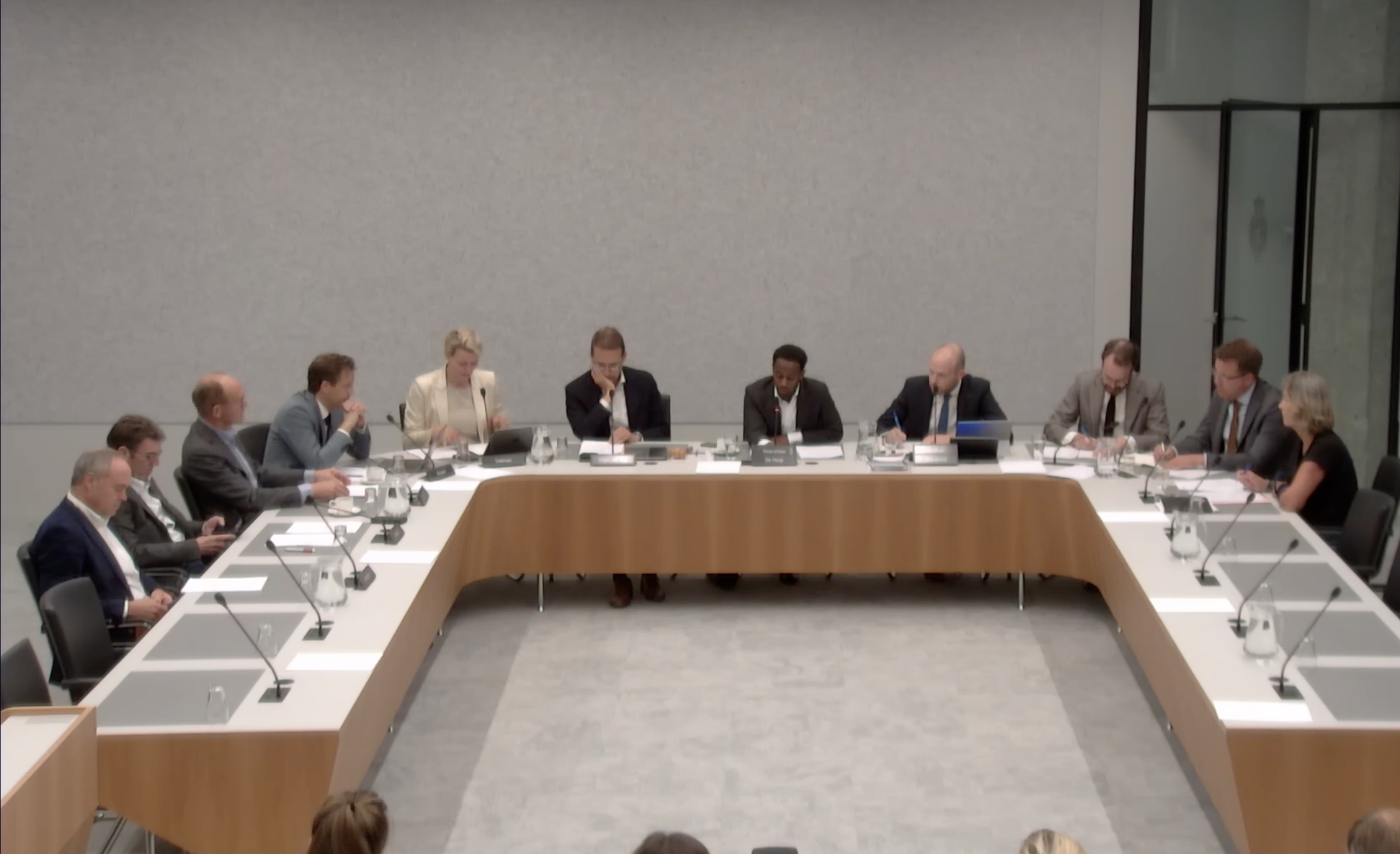
On 16 July 2025, the Dutch Parliament scrutinised the government’s draft Act and Decree implementing the Renewable Energy Directive (RED III). Across party lines, MPs pressed the State Secretary for Infrastructure and Water Management on whether the proposed system is workable, competitive, and sufficiently ambitious. The debate revealed both sector-specific concerns and broader strategic questions about the Netherlands’ position within the European energy transition.
Investment Horizons and Fair Competition
The VVD (Liberals) warned that the 2030 horizon may be too short given the long payback periods for investments in new fuels infrastructure, especially compared to neighbouring Belgium and Germany. The party also criticised current maritime fuel rules, which risk opening the Dutch market to untaxed, non-EU biofuels—potentially undercutting European producers. The VVD urged stronger safeguards for fair competition, support for the rollout of B10 diesel, and reconsideration of the 1.7% Annex IXb cap to unlock more sustainable feedstock use.
Feasibility for Smaller Players
The BBB (Farmer–Citizen Movement) highlighted risks for small and medium-sized enterprises. The party argued that the new system must not create excessive costs or complexity for suppliers active in multiple sectors. The role of the ‘inboekdienstverlener’ (booking service provider) should be made accessible for sole traders and individuals, while biomass verification must avoid duplication and unnecessary expense. BBB also stressed that Dutch rules should not exceed EU standards, to ensure a level playing field.
Safeguarding Sustainability
For the GreenLeft–Labour, the central issue was sustainability. MPs pointed out that there is very limited room left to scale up conventional, non-problematic biofuels, meaning stricter oversight and innovation are required. The parties pressed the State Secretary for stronger action against biofuel fraud, and for additional measures to keep sectors on track for climate neutrality by 2050.
Oversight and Long-Term Strategy
D66 (Liberal-Democrats) questioned whether the transition to CO₂ chain emission regulation could, at least temporarily, be less strict than the current system. They noted the absence of a phase-out plan for refining in the legislation and called for intensified cross-border supervision of sustainable fuels to ensure effective oversight beyond Dutch borders.
Sectoral Balance and Regional Spillovers
The SGP (Reformed Party) focused on sectoral inconsistencies. MPs flagged that the ban on Annex IXb biofuels in shipping stands in contrast to their continued use in aviation, creating incoherence in the system. They argued for minimising the use of T1 biofuels and requested the application of the mass balance method for bio-LNG linked to green gas in the grid. SGP also cautioned against fuel uptake shifting to Germany and Belgium, where RED III rules are not yet enforced.
Similarly, the Christian Union (CU) demanded clarity on negotiations with neighbouring countries to prevent leakage effects in inland and coastal shipping. The CU also pressed for an update on the Grinwis motion, which calls for stronger demand-side measures for renewable hydrogen under the EU’s Clean Industrial Deal.
Strategic Takeaways
Parliament’s questions underscore a recurring tension: how to reconcile climate ambition with competitiveness and feasibility. While the VVD and BBB stressed investment certainty and fairness for Dutch and smaller market players, GreenLeft–Labour and D66 pushed for stronger safeguards against fraud, oversight gaps, and insufficient long-term planning. The SGP and CU highlighted cross-border issues, warning that Dutch rules may drive fuels and investment abroad if not aligned regionally.
With the implementation deadline looming, the government will need to balance these demands in order to secure a credible, enforceable, and competitive RED III framework. The coming months will show whether amendments to the Act and Decree can bridge these divides and offer both clarity for investors and integrity for climate policy.