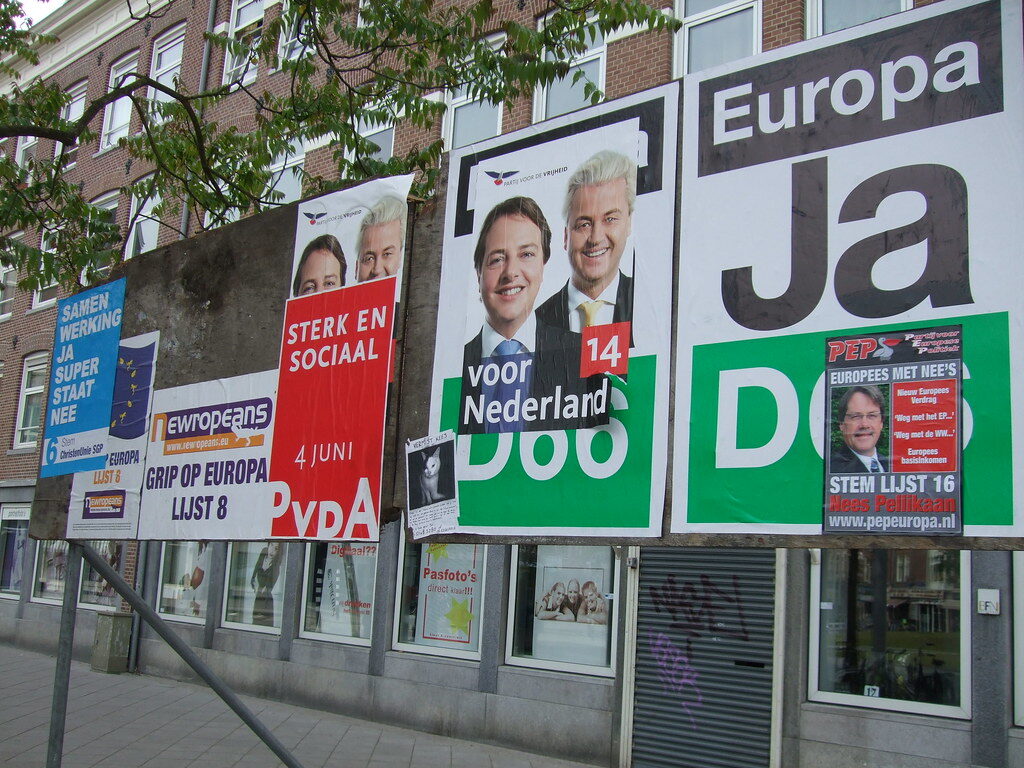
As the Netherlands approaches the parliamentary elections on 29 October, parties are setting out sharply contrasting visions on how to steer the energy transition. Their manifestos reveal not only differing levels of climate ambition but also distinct ideas on the role of biofuels, the scaling of biogas, and the credibility of national climate targets. Together, these debates mark out the contours of what could become some of the most decisive coalition negotiations after the vote.
Biofuels in Transport
Few areas divide parties as clearly as the future of biofuels in aviation, shipping, and road transport. Christian Democrats (CDA) highlight synthetic fuels, green gas, and other clean technologies as key opportunities for decarbonisation, while liberals of D66 endorse a greater role for biofuels as long as their production does not drive deforestation or biodiversity loss. Volt is explicit about the potential of CO₂ reuse in fuels and blending mandates for aviation, and the Christian Union backs green hydrogen for freight and heavy road transport.
Other parties are more cautious. JA21 favours hydrogen, electric aircraft, and SAF, but resists mandatory electrification of heavy vehicles. The VVD stresses circularity, future-proof taxation, and keeping excise duties affordable. NSC links progress to the EU’s ETS system, arguing that raising aviation’s SAF mandate and bringing shipping fully into the ETS will provide a level playing field. BBB ties its support to affordability and reliability, promoting biodiesel and synthetic fuels while resisting zero-emission zones.
On the other side, SP and PvdD fundamentally oppose biofuels as a long-term solution. The SP limits their role to temporary waste-based options and calls for synthetic kerosene and kerosene taxation, while the PvdD rejects blending altogether, citing nature loss and food security risks. The strongest resistance comes from PVV and FVD, who want to end blending obligations entirely and abandon climate frameworks such as the Paris Agreement.
Scaling of Biogas
Green gas is emerging as another fault line. CDA, VVD, SGP, NSC, and BBB all envision a strong role for biogas in the energy transition, investing in manure digestion and local installations to cut emissions and provide rural energy security. SGP supports a blending obligation for green gas, excluding horticulture, while BBB ties biogas expansion to circular fertilizer production and heat recovery projects.
Volt and the Christian Union take a more selective approach, backing mono-manure digesters or high-value applications such as aviation fuels. For them, green gas should not become a blanket solution but remain part of a broader innovation mix.
The Party for the Animals, however, rejects biogas outright. In their view, manure digestion prolongs intensive livestock farming, and subsidies or permits for so-called green gas should be revoked. This position places them in sharp opposition to most other parties, for whom biogas represents one of the most immediate, scalable domestic alternatives to fossil natural gas.
Climate Targets
The debate over climate targets reflects the full spectrum of Dutch politics. At the ambitious end, GL-PvdA, Volt, D66, SP, and PvdD argue for strengthened commitments, with Volt and GL-PvdA aiming for climate neutrality by 2040 and interim emission cuts of 65 percent by 2030. For these parties, the Netherlands should not only meet but surpass EU targets, leading by example in Europe.
More centrist and pragmatic parties such as CDA, VVD, NSC, CU, and BBB accept the EU framework but emphasize feasibility, affordability, and resilience. NSC in particular views the ETS as the main instrument to drive decarbonisation, calling for an end to free emission rights and fossil tax breaks. BBB stresses that targets must remain realistic and affordable, with policy adjusted to what industry and citizens can carry.
At the other end of the spectrum, JA21, PVV, and FVD reject or question the current goals. JA21 dismisses existing climate targets as unachievable, while PVV and FVD call for a wholesale reversal: repealing the Climate Act, exiting the Paris Agreement, and abandoning CO₂ reduction altogether.
Conclusion
The upcoming election presents voters with a fragmented renewable landscape. Some parties call for acceleration, embedding strict mandates and ambitious goals, while others advocate for a slower, more pragmatic path, or seek to undo existing commitments altogether. The next coalition will therefore face decisive choices on how to balance affordability, technological innovation, and international responsibility.
The full overview of party positions can be found in the following two detailed PDF reports: Manifestos 1 & Manifestos 2.